Devotional
Posted: 11/05/2026
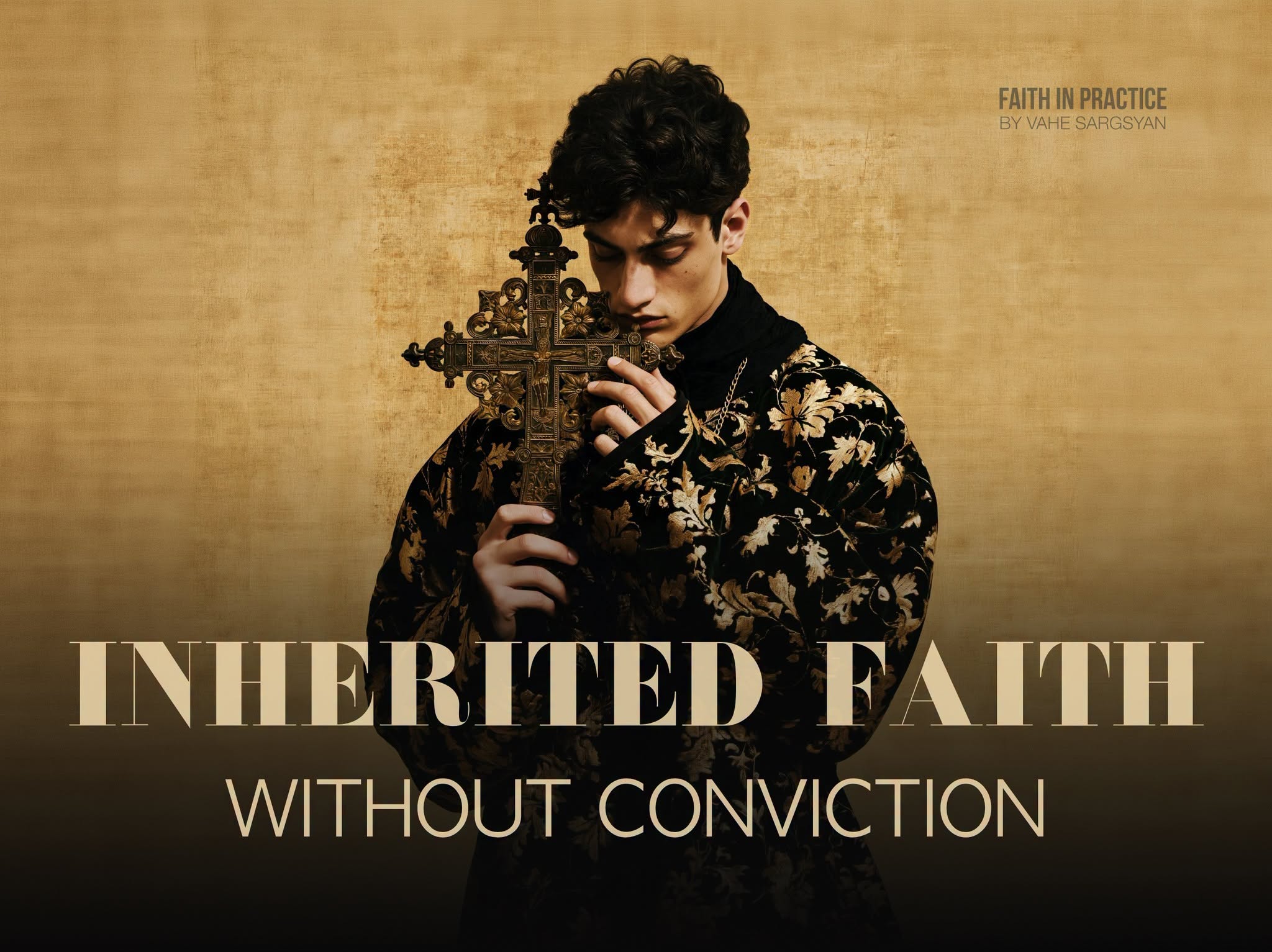
If one day you became convinced that everything you were taught about Christianity was false and that the truth was somewhere else, would you follow the truth, or stay with the faith you inherited?
I once asked this question to my Sunday School students. Most of them answered that they would remain with the faith they had been raised in, even if they became convinced it was false. Their answer was understandable. Their faith was tied to family, memory, culture, church, and the people they loved. But Christianity cannot rest on emotion alone. If we believe Christianity is true, then we should not be afraid to examine it. St. Paul says plainly, “Examine yourselves as to whether you are in the faith. Test yourselves” (2 Corinthians 13:5).
So I asked them another question: have Armenians ever abandoned the faith of their ancestors because they became convinced that something else was true? Of course we have. Armenia did not begin as a Christian nation. Under St. Gregory the Illuminator and King Trdat, the nation turned away from its pagan religion and embraced Christianity. According to the tradition of the Armenian Church, Gregory proclaimed Christ even when the king resisted him, and that witness eventually became part of Armenia’s conversion. The point is simple: our ancestors did not remain pagan merely because paganism was inherited. They accepted a new faith because they came to believe it was true.
That principle became even clearer during Vardanants. When the Persian king attacked the Christian faith and demanded that the Armenians abandon it, the Armenian nobles and clergy did not respond by saying, “Christianity is simply our tradition.” Their answer was much stronger. In essence, they declared that no threat, torture, loss of property, or death could separate them from Christ, because their covenant was not merely with a human custom but with God Himself. Their faith had moved beyond inheritance into conviction.
This is exactly the difference we need to recover. Do we believe in God because our parents told us to? Because we were baptized as children? Because we are Armenian? Because church feels familiar? Or do we actually know what we believe and why? Do we think of God as a kind of heavenly magician who grants wishes when we are in trouble, or do we truly believe in His existence, His truth, His judgment, and His redemptive love? Do we worship Christ because we know Him - or simply because Christianity is part of the environment in which we were raised?
Christ Himself says, “If you abide in My word, you are My disciples indeed. And you shall know the truth, and the truth shall make you free” (John 8:31–32). Notice that He does not praise blind attachment. He speaks of abiding, knowing, and truth. The Bereans were even praised because they “searched the Scriptures daily to find out whether these things were so” (Acts 17:11). Christianity does not ask us to switch off our minds. It asks us to use them honestly.
St. Cyril of Jerusalem says something remarkable to the people he was teaching: “Even to me, who tell you these things, give not absolute credence, unless thou receive the proof of the things which I announce from the Divine Scriptures.” He continues, “This salvation which we believe depends not on ingenious reasoning, but on demonstration of the Holy Scriptures.” That is not the language of a faith afraid of examination. It is the language of confidence in truth.
But examination must lead somewhere. Christ says that the person who hears His words and does them is like “a wise man who built his house on the rock” (Matthew 7:24). The one who hears and does not act builds on sand. St. John Chrysostom explains that merely hearing is not enough; there must also be obedience in action, because the strength of the house comes from its foundation. Conviction is not simply knowing arguments. It is allowing the truth we have discovered to become the foundation of the way we live.
Inherited faith is a gift. It gives us a language, a community, a history, and a place from which to begin. But it is only a beginning. At some point, every Christian has to ask: Do I believe this because it was handed to me, or because I have examined it and found it true?
Our ancestors were willing to leave paganism for Christ because they believed they had found the Truth. Later generations were willing to die rather than abandon Christ because that Truth had become their own conviction.
The question for us is much simpler, but no less serious:
Have we inherited Christianity—or have we actually chosen to believe it?
