Devotional
Posted: 01/08/2026
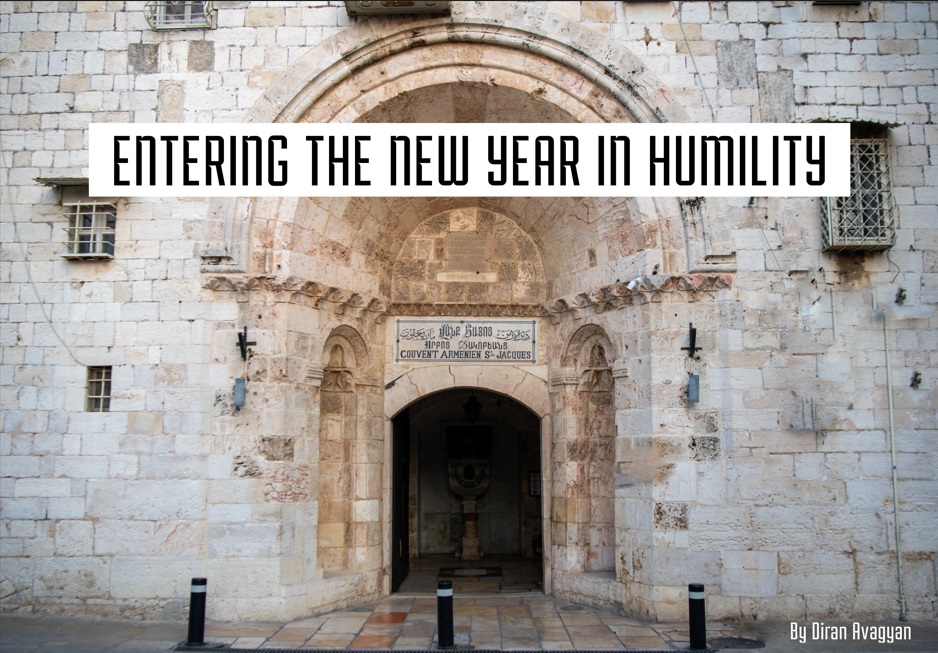
Many Jerusalemites would probably remember the late Kevork Jinivizian, commonly known as “Jardar,” a humble man who dedicated his entire life to literary work. In addition to his involvement in the publication of Sion, the periodical of the Armenian Patriarchate of Jerusalem, and his service at the printing press, he was also responsible for preparing the church calendar.
As a young seminarian, I was always fascinated by a special column in that calendar where he noted Jewish and Islamic holidays. Considering that he worked without modern technology, his accuracy and mastery of computus were remarkable.
Computus, the clerical science of calendar calculation, determines the year and liturgical cycles based on the movement of the sun (solar), the phases of the moon (lunar), or both together (lunisolar). Throughout history, humanity has lived by many calendars. For example, the year 2026 according to the Gregorian calendar corresponds to the year 5786 in the Jewish calendar, 1447–1448 in the Islamic calendar, and approximately 1475 according to the Armenian Era.
No matter how we calculate time or which calendar we follow, it becomes evident that we are only a brief segment in the vast timeline of creation. Our achievements may lead us to believe that we stand at the center of the universe, yet in the larger scheme of things, we are profoundly small and often forgotten.
For some, this realization may feel unsettling, even diminishing, as it challenges the ego and disrupts our self-perception. Yet it is also an invitation to humility and to the acceptance of something greater than ourselves.
I doubt that many who knew Jardar remember his literary work. Yet he is remembered for his humility, his modest way of life, his faith, and his deep belief in Christian unity.
May we, too, become worthy of remembrance and blessing during our short segment of time in the calendar of humanity. As Jerusalemites say, “Blessed is the one who has remembrance in Zion.”