
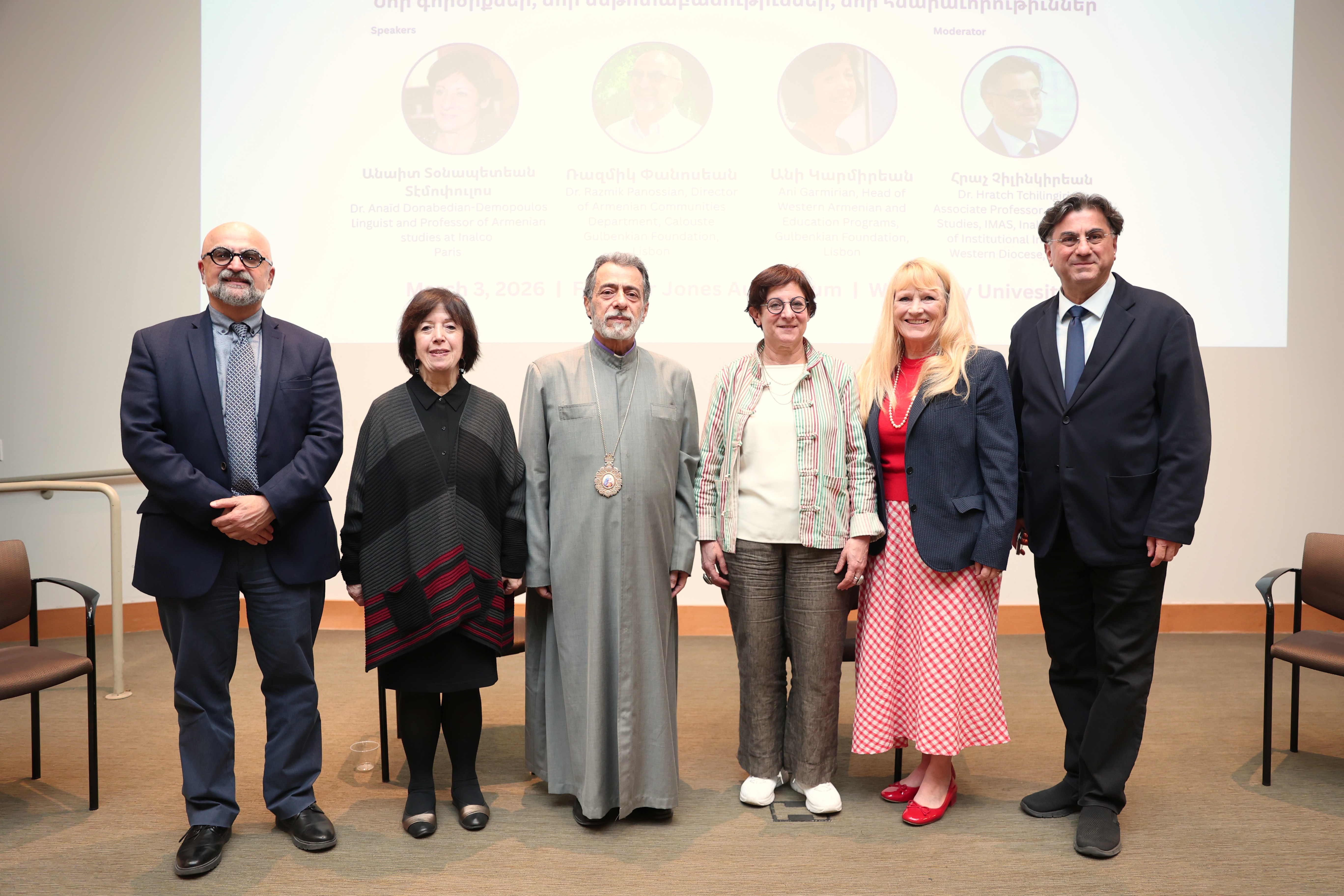
A colloquium examining the future of Western Armenian and innovative approaches to language education brought together scholars, teachers, educators, and community leaders for a discussion on language vitality, pedagogy, and institutional collaboration. Titled “Armenian Language Innovations: New Tools, New Methods, New Possibilities,” the event highlighted strategies aimed at strengthening Western Armenian in the diaspora.
The colloquium was organized jointly by the Western Diocese of the Armenian Church, under the auspices of Primate Archbishop Hovnan Derderian, and Woodbury University. Moderator Dr. Hratch Tchilingirian, Director of Institutional Innovation at the Western Diocese, noted in his opening remarks that the colloquium reflected the growing collaboration between the two neighboring institutions in Burbank, California.
Woodbury University President Jeff Belantoni welcomed participants and emphasized the importance of partnerships in advancing educational initiatives. He also highlighted the accomplishments of several Woodbury alumni of Armenian descent who now serve as leaders in various industries and organizations.
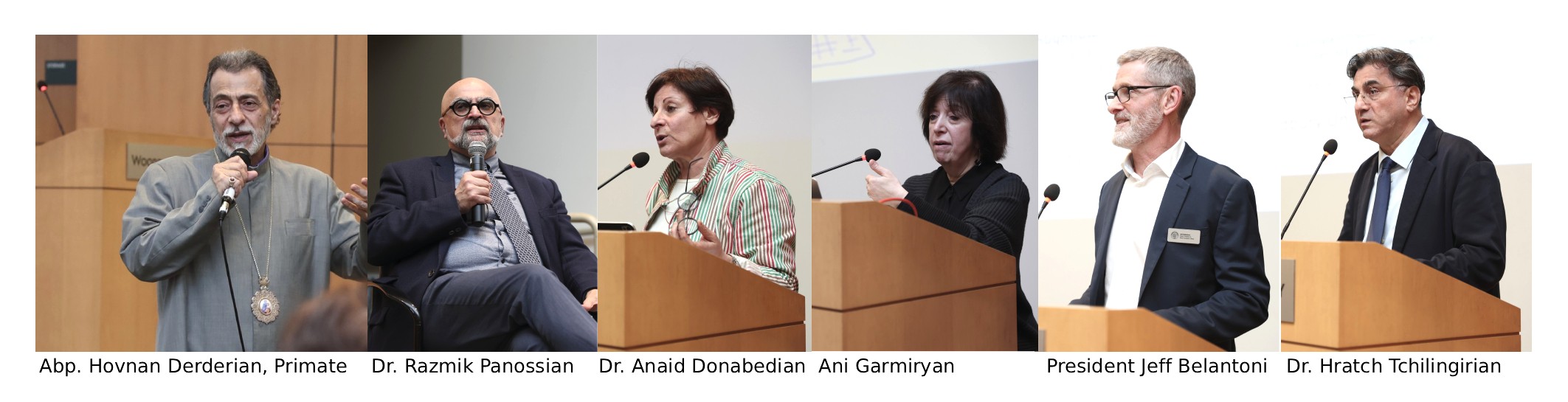
Setting the broader context for the discussion, Dr. Tchilingirian pointed to the challenges facing Western Armenian, which UNESCO classified as an endangered language in 2010. The designation has intensified debate across the Armenian diaspora about how to preserve and revitalize the language. Addressing these challenges, he noted, requires cooperation among scholars, educators, community leaders, and families, along with financial resources and the support of institutions capable of implementing innovative programs.
Among the organizations playing a major role in these efforts, Dr. Tchilingirian noted, are the Calouste Gulbenkian Foundation’s Armenian Communities Department in Lisbon and the Armenian Studies Department at the Institut National des Langues et Civilisations Orientales (Inalco) in Paris. Both institutions have supported projects aimed at strengthening Western Armenian through new teaching methods, digital resources, and community-based initiatives.
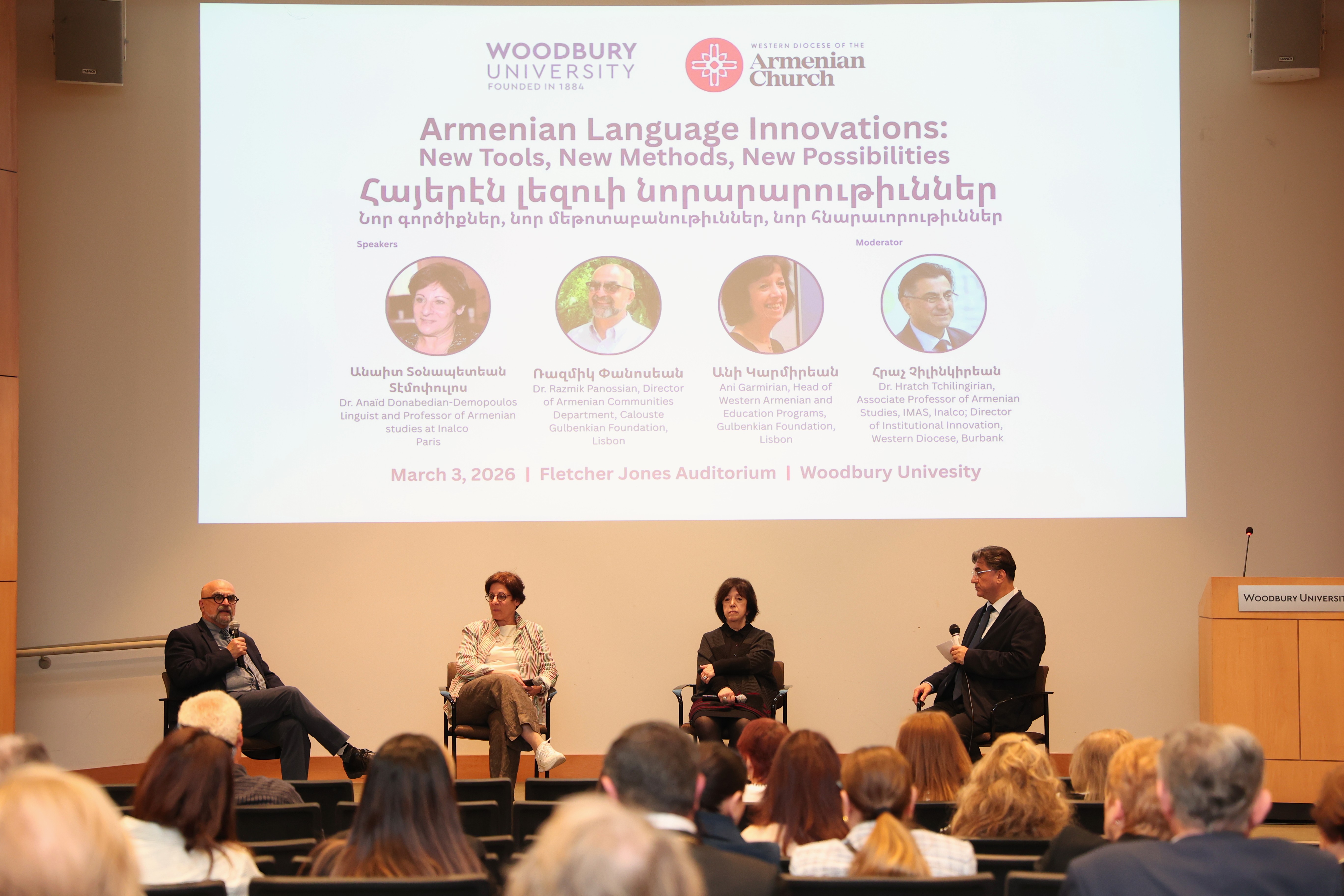
He then introduced the panelists: Dr. Razmik Panossian, Director of Gulbenkian’s Armenian Communities Department and Ani Garmiryan, Senior Program Officer for Western Armenian Language and Education; and Prof. Anaïd Donabédian, linguist and Chair of Armenian Studies at Inalco.
Dr. Panossian spoke about how change in Armenian-language education can emerge from both institutional initiatives and grassroots community efforts. He also pointed to linguistic developments across the diaspora affecting both Western and Eastern Armenian. As migration and globalization bring speakers of different dialects together, he noted that the two forms of Armenian can benefit from mutual exchange, while Armenia can also play a constructive role in supporting diaspora linguistic diversity.
Prof. Donabédian addressed the balance between institutional support and individual initiative in preserving heritage languages. Schools, cultural organizations, and academic programs, she said, remain essential for sustaining Western Armenian. At the same time, families and individuals play a crucial role, since language transmission often begins at home and through everyday community interaction. She also discussed challenges faced by diaspora schools where students speak both Eastern and Western Armenian. While linguistic differences can sometimes create tensions, she suggested such environments can also provide opportunities for mutual enrichment.
Prof. Donabédian also spoke about the International Master’s in Armenian Studies, a two-year online program at Inalco that prepares educators for Armenian-language instruction and equips teachers with modern pedagogical skills suited to diaspora classrooms.
Ani Garmiryan presented several educational tools developed through the Gulbenkian Foundation’s initiatives, including Zarmanazan, Znoog.com, and other digital learning resources. Her presentation focused on new approaches designed for children and teenagers, using interactive platforms and teaching methods aimed at making Armenian-language learning more engaging and fun for younger generations.
The evening concluded with remarks by Archbishop Hovnan Derderian, who reaffirmed the Western Diocese’s commitment to strengthening Armenian language, culture, and identity. He praised the speakers’ innovative work and emphasized that preserving Western Armenian will require sustained commitment, creative thinking, and collective effort across the diaspora.
